

The Black Fish speaking tour comes to Nottingham

 Published:
September 22, 2013 20:30
by Disillusioned Kid |
Published:
September 22, 2013 20:30
by Disillusioned Kid |
Neighbourhoods: nottingham
The oceans are dying, but there is something we can do about it. That was the message of Wietse van der Werf during his talk in Nottingham on Saturday evening.
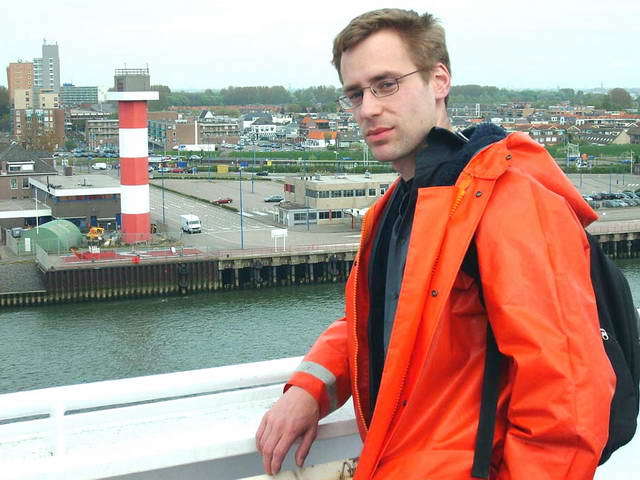
Wietse van der Werf (credit: Tash)
Wietse was speaking at The Corner in the Lace Market as part of a two month tour around the UK and Ireland to raise awareness about the threats to the world's ocean and what the group he helped form, The Black Fish, and others are doing about it.
Wietse is no stranger to Nottingham, having lived here several years back. In fact he was a co-founder of Nottingham Indymedia. As such he was well suited to explaining to a group of people from a city which is - as one person noted during the post-talk questions - about as far as you can get from the sea, why its defence is important and what people can do.
Before delivering his own spiel, Wietse showed, Losing Nemo, an animated film explaining why Black Fish was created and some of the things they've been up to. The video (available online) is a very impressive effort and the creatives who apparently donated five months of their own time to produce it deserve considerable credit. If I have one criticism it was the film's use of phrases like: "Science tells us x" without detailing the specific journals which make the claims they are referring to. However, I was pleased to see that this information is available on the groups' website.
Wietse then began his talk, developing the themes from the video, particularly in terms of the various threats to the ocean. It is astonishing just how wasteful modern fishing seems to be. Something like 40% of all sealife caught is thrown back as waste. The industry is also rife with corruption and criminality, including links to organised crime.The picture painted was not a pretty one.
Wiestse used the word "crazy" on a number of ocassions and not without good reason. He described how tuna, once regarded as a "dirty meat" in Japan had been cleverly marketed and was now highly sought after, so much so that several tuna species are at risk of extinction. In response to this, Mitsubishi have taken to buying up large quantites of Bluefin Tuna (the rarest and most expensive of all of them) and deep freezing them, so that they have a stock for the future when the price will (presumably) be even higher.
In fact almost half of the seafood caught isn't for human consumption at all, but to feed livestock or pets. The pig is the world's most prolific marine predator, followed by the chicken. Cats and dogs eat more fish than all the worlds seals and sharks combined.
Wietse was very apologetic about offering such a "depressing" account, but his talk was not without a glimmer of hope. Black Fish have been up and running for around three years and have been doing some very interesting work.
It is apparent from their website that Black Fish have various approaches, but Wiestse focussed on the work he dubbed "citizen enforcement". It turns out that many of the most destructive fishing practices are already illegal it is just that the law is not enforced. Indeed, repeat offenders may continue to receive huge EU subsidies. With the people responsible for enforcement underfunded (in stark comparison, for instance, to those responsible for policiing borders), Black Fish have begun training activists to do this work themselves. This includes documenting what is on fishing boats, what size the holes of their nets are, what they are up to etc.
Of course, this approach isn't entirely new. Sea Shepherd Conservation Society have described themselves as "enforcing international law" for decades. What seems to be different about this work is that it does not require the extensive infrastructure and funding of Sea Shepherd (boats, crews, fuel etc.).
Interestingly, one of the tactics that Black Fish have pioneered is using small (solar powered) drones to monitor what boats are doing off shore, a cost-effective approach (i.e. it's cheaper than a boat) now being explored by some of the official enforcement bodies. This raises some interesting ethical and legal questions, but it is indicative of the sort of creative thinking which Black Fish seem to be open to.
The non-sectarianism of the talk was also encouraging. Wiestse was happy to acknowledge the work of other groups working for ocean defence (e.g. Greenpeace and Sea Shepherd) and there was even a chance for a speaker from Nottingham Friends of the Earth to say a few words about Marinet, Friends of the Earth's marine conservation wing.
During questions at the end, I asked about what an ideal situation would be, noting the limitations of Hugh Fearnley-Whittingstall's Fish Fight campaign which encouraged people to eat unpopular fish, only for these to become threatened. Wietse acknowledged this issue, noting that the TV series had in fact led to an overall increase in fish consumption. He described overconsumption as the real problem. He was hesitant to tell people what to do, so stopped short of condeming fish consumption, but argued that eating fish should be seen as "controversial."
When a later questioner asked if there were any fish which people shouldn't feel guilty about eating he side-stepped the question, encouraging people to do their own research.
I left concerned for the world's oceans, but inspired that people were beginning to take action to defend them. What worries me given the scale of the problem and the timescales involved (one study warns that the oceans could be "empty" by 2048) is that it isn't even close to being enough. This isn't in any way a criticism of those involved, but should force the rest of us to ask some big questions. We are reliant on the oceans for our very survival. Are we going to stand by while they die. While they are killed?
Links:
Group co-founded by Wietse
 Ocean defence activist in Nottingham
Indymedia report of a previous visit by Wietse to Nottingham (2010)


 Latest articles feed