

Photography Advice and Guidance
 Published:
November 22, 2011 01:29
by Tash [Alan Lodge] |
Published:
November 22, 2011 01:29
by Tash [Alan Lodge] |
Neighbourhoods: nationwide uk
In spite of assorted agreements with the police, officers continue to be obstructive to photogaphy in the street.
Although the trend of photographers getting hassle go's up and down over time, It has always been thus!
The object of this page is to strengthen your knowledge regarding issues surrounding photography, both in 'actions' and subjects in a public place. In situations whether your photographing an action / demonstration, or people and buildings in the High Street .... it has become quite problematic and increasingly so. I think 4 main issues have a bearing here.
- Policeman and assorted officers don't want to be photographed, it might show some wrong-doing.
- People involved in direct action, a photograph might be evidence against an individual breaking the law.
- The notion that some believe people have a right of privacy in a public place.
- The threat of terrorism and a photographer might be conducting 'hostile reconissence'.
So, I think to start with, and since we are dealing with those interested in the sort of subjects Indymedia visitors might be interested to know about ..... I should say the first consideration is:
IS IT LIKELY THAT A PICTURE I TAKE, WILL PROVIDE EVIDENCE TO PROSECUTE ANYONE?
I struggle with this all the time and it is central in my mind when photographing activities. It might be argued that it is safer just to take pictures on your holiday and leave a camera at home otherwise. I don't agree.
Those of us who are serious about this media have a more positive motive.
Firstly, we sometimes moan about the lack of coverage, issues that concern us don't get in the main stream media, or, when they do are monstered and rubbished.
Many of us have been involved in the 'alternative media' in a variety of forms to try and fill this gap. It is a prime objective of the Indymedia Network Project. Should people not have photographed, filmed, recorded or written about events themselves in recent years, vast chunks of history would not have been told or known about. For future activities, I think it is important to show what has been possible in the past. Our coverage should be inspiring to others in the future. Not just the near future either, photographers both professional and casual contribute to our 'social history'. I want my 'tribes' included in this knowledge.
Secondly, having said I don't want to provide evidence to prosecute anyone ..... I do have 'form' for providing picture to defend people wrongly accused. In fact, this is where I started during my festival and traveller days. Authorities and policemen in particular are given training in the aspects of how to give authorititive evidence in court. Many times have I seen this 'blown out of the water' by a witness giving evidence and showing a series of photographs or video demonstrating the officer lying through his teeth. It's not only photographs of course, you should make written notes of times, date, places. [who, what, were and when]. Voice recording equipment is much cheaper and available now, dictaphones, mobile phones and the like can be used covertly or obvertly.
Now, bearing all the above in mind, you have to be aware of the pressures there are now, when photographing your interests in a public place. As far as I know, there are only two offences that are committed where you can be properly arrested. It is an offence to take photographs or collect information, likely to be of use in terrorism 'hostile reconissence' and you are not permitted to take an indecent photograph of a child.
As devices to try and prevent you, the police have been know to threaten:
- Harrasment, causing alarm and distress.
- Obstruction [obstructing and officer in the execution of his duties].
- Seizing equipment and media that might assist in the investigation of crime. [PACE 1984].
- Stop and Searches under sections 44 and now 43 of the Terrorism Act 2000
- Collecting info on police for terrorism purposes [Sect58a Terrorism Act 2000]
The Sect 58a is still one of the most dangerous, since it is in so many peoples mind, that it is an offence to photograph policemen. IT IS NOT. The Metropolitan Police, Photography advice [below] makes it quite clear that this is not true [unless you are a terrorist of course]. They have to have resonable suspicion that you are.
Now, on to some advice. It is simple. You can photograph largely what you like in a public place, with a couple of exceptions that I've described. BUT, it is complicated in understanding the speaded of guidelines and advices that are now published. The more serious you are about being confident in your photography, the more of this lot you'd want to read. For the casual snapper, the first few links should help.
note: having read any of this, you will probably know more than the average policeman, PCSO or CSO. Their training around these issues is truely terrible. So many times when you get told you can't take pictures, they try and prevent you, or, demand to see or delete them, they are ignorant of the law. You might consider downloading and printing the "Letter from Chair of ACPO Communication Advisory Group" and keeping it with you to show them. I think it is probably on a minority of occasions when police and non-warranted officers try to obstruct you for their own reasons, it's mostly ignorance {although I might be wrong of course}.
*
Links to photography Advice Resources [download PDF's at bottom of page]
Letter from Chair of ACPO Communication Advisory Group: which was circulated by Andrew Trotter, Chief Constable, British Transport Police, Chair of ACPO, Communication Advisory Group.Versions: doc txt
Editorial Photographers UK - Police, photographers and the Law
ACPO Communications Advisory Group Guidance: ACPO press centre 2010
Metropolitan Police - Photography advice
Metropolitan Police - Guidance issued to MPS officers and staff re stop and search photo policy
John Yates, Assistant Commissioner Specialist Operations - 14 December 2009
Shamik Dutta, Fisher Meredith : Photography Legal FAQ PDF
UK Photographers Rights: A short guide to photographers rights in the UK
Photographers Rights And The Law In The UK : A brief guide for street photographers Part 1 Part 2
Photographers Rights And The Law In The UK : A brief guide for street photographers
I am a Photographer Not a terrorist
I am a Photographer Not a terrorist Bust Card
I am a Photographer Not a terrorist Bust Card PDF
I am a Photographer Not a terrorist ACPO letter
Photography and Counter-Terrorism legislation Home Office circular 012 / 2009
British Security Industry Association Photography Photography and Hostile Reconnaissance
British Transport Police - Rail Enthusiasts Guidelines
National Rail - Advice for Rail Enthusiasts visiting stations
++++++++
Nottingham photographer arrested by armed officers
Indymedia photographer arrested by armed officers [feature]
Date set for photographer 'obstruction' trial for snapping armed police
Disclaimer: I'm a photographer, not a lawyer. So, don't blame me if you still get into bother. The content in the links are the responsibily of those authors.
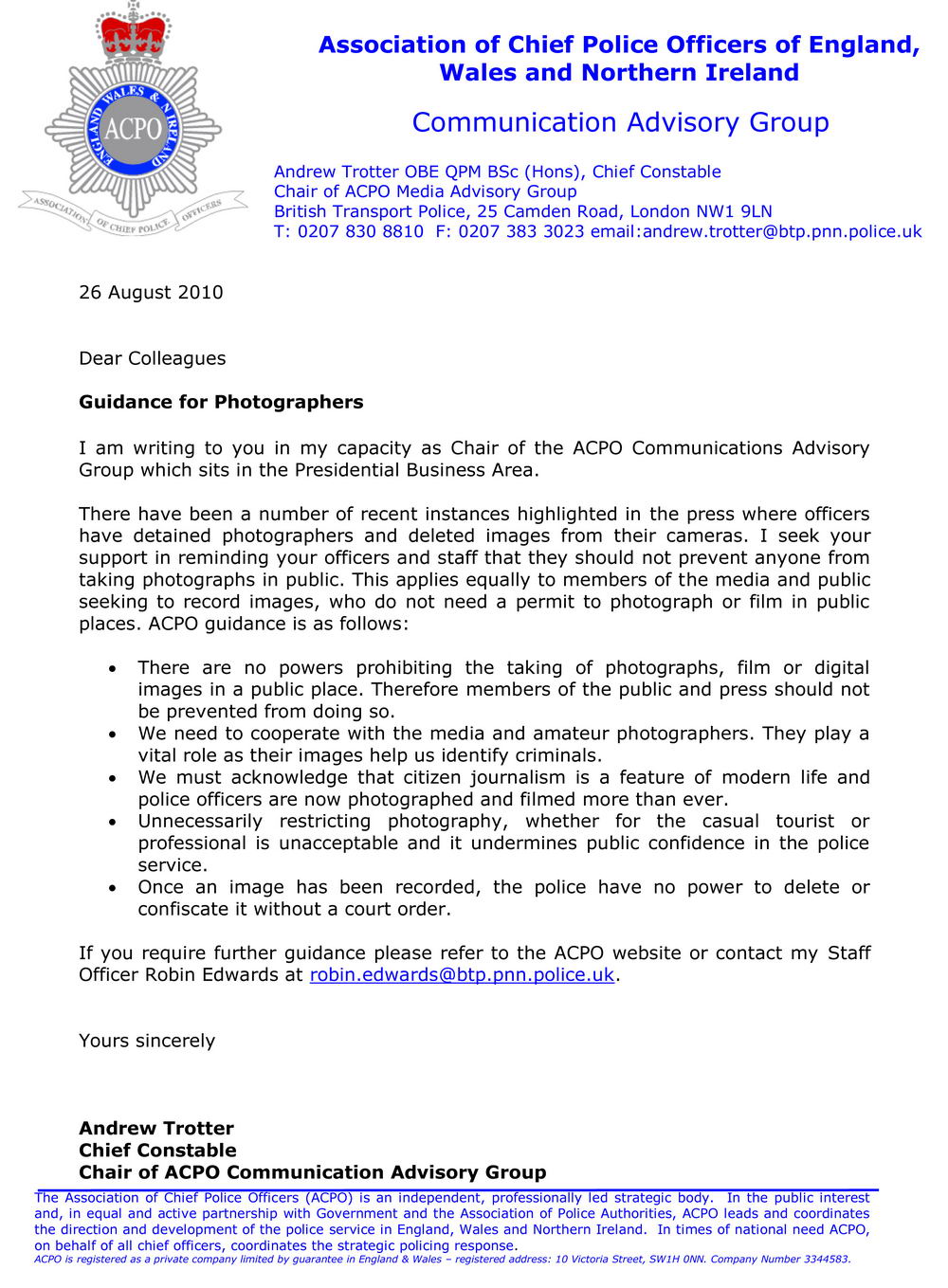
Guidance for Photographers : Andy Trotter, Chief Constable, ACPO Media lead
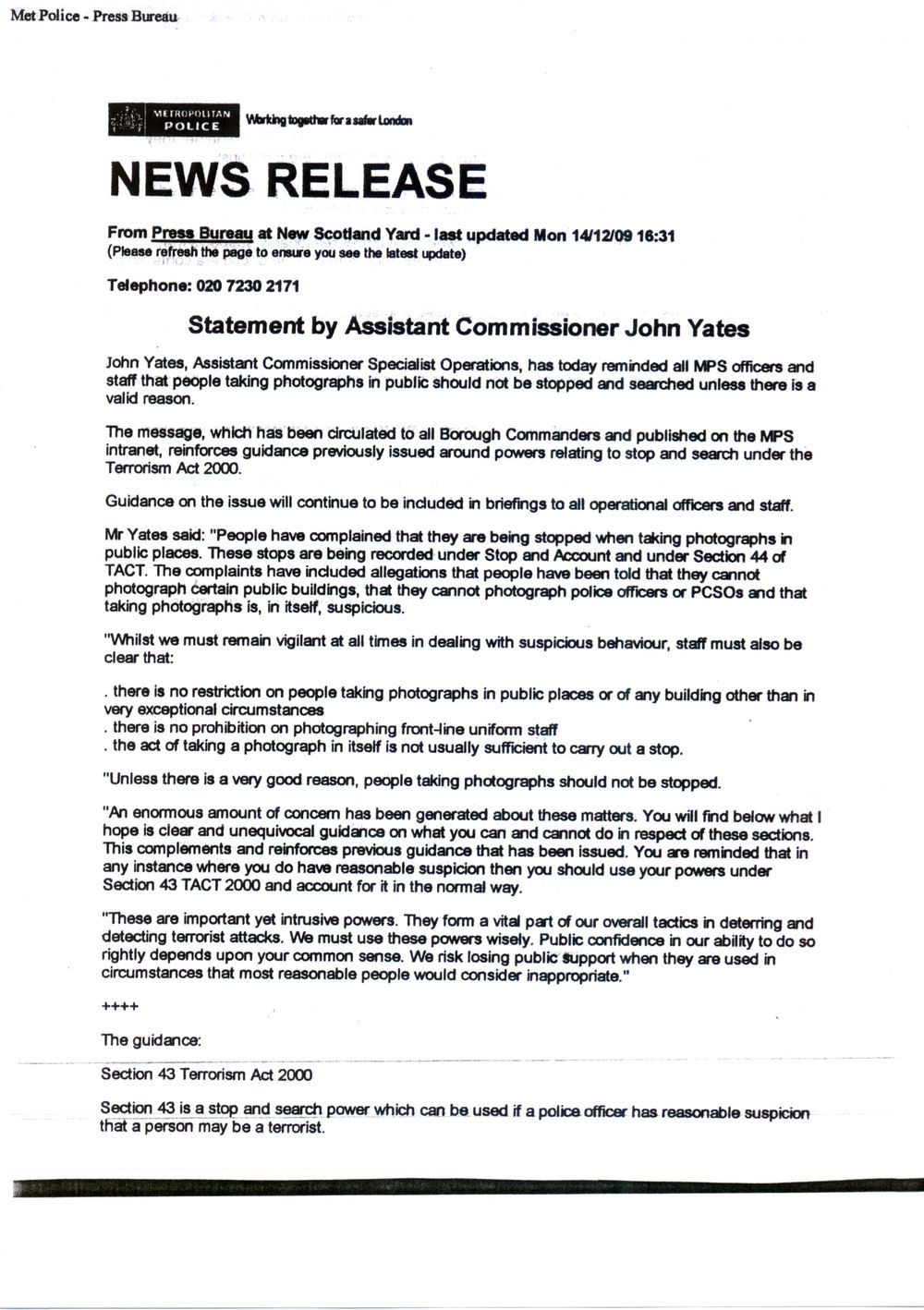
Statement by Assistant Commissioner John Yates 1
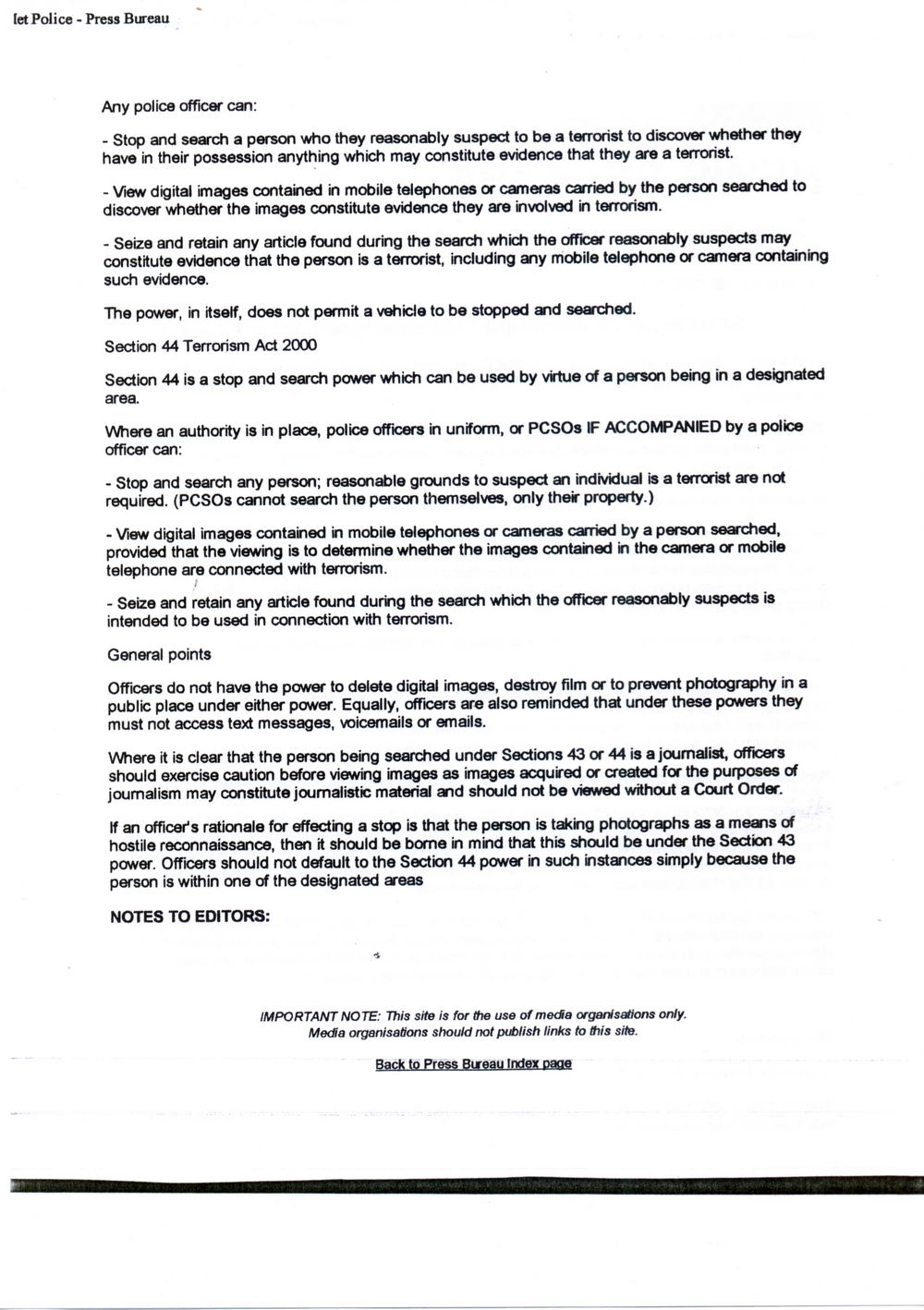
Statement by Assistant Commissioner John Yates 2
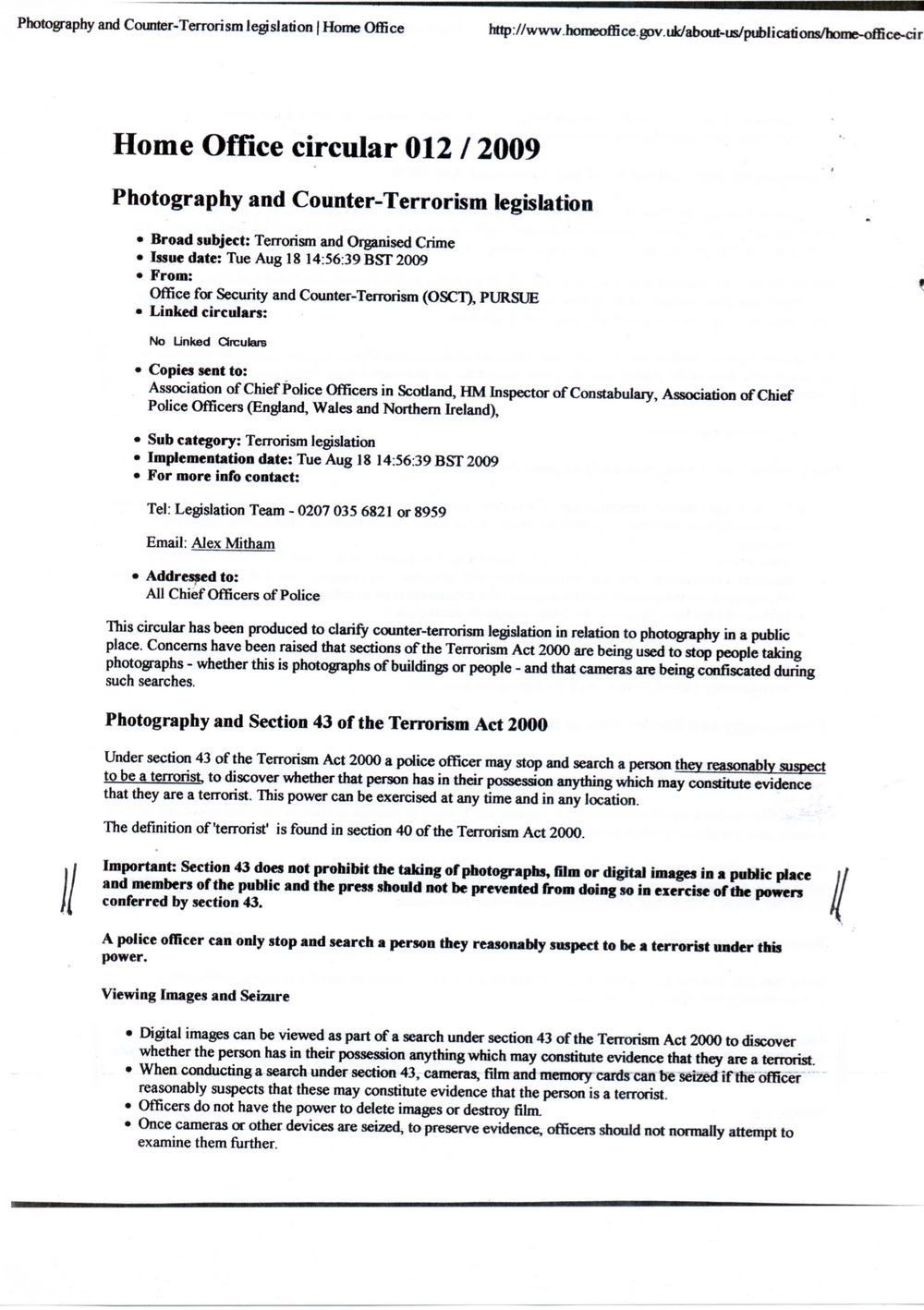
Home Office Circular 012/2009 Photography and Counter-Terrorism Legislation 1
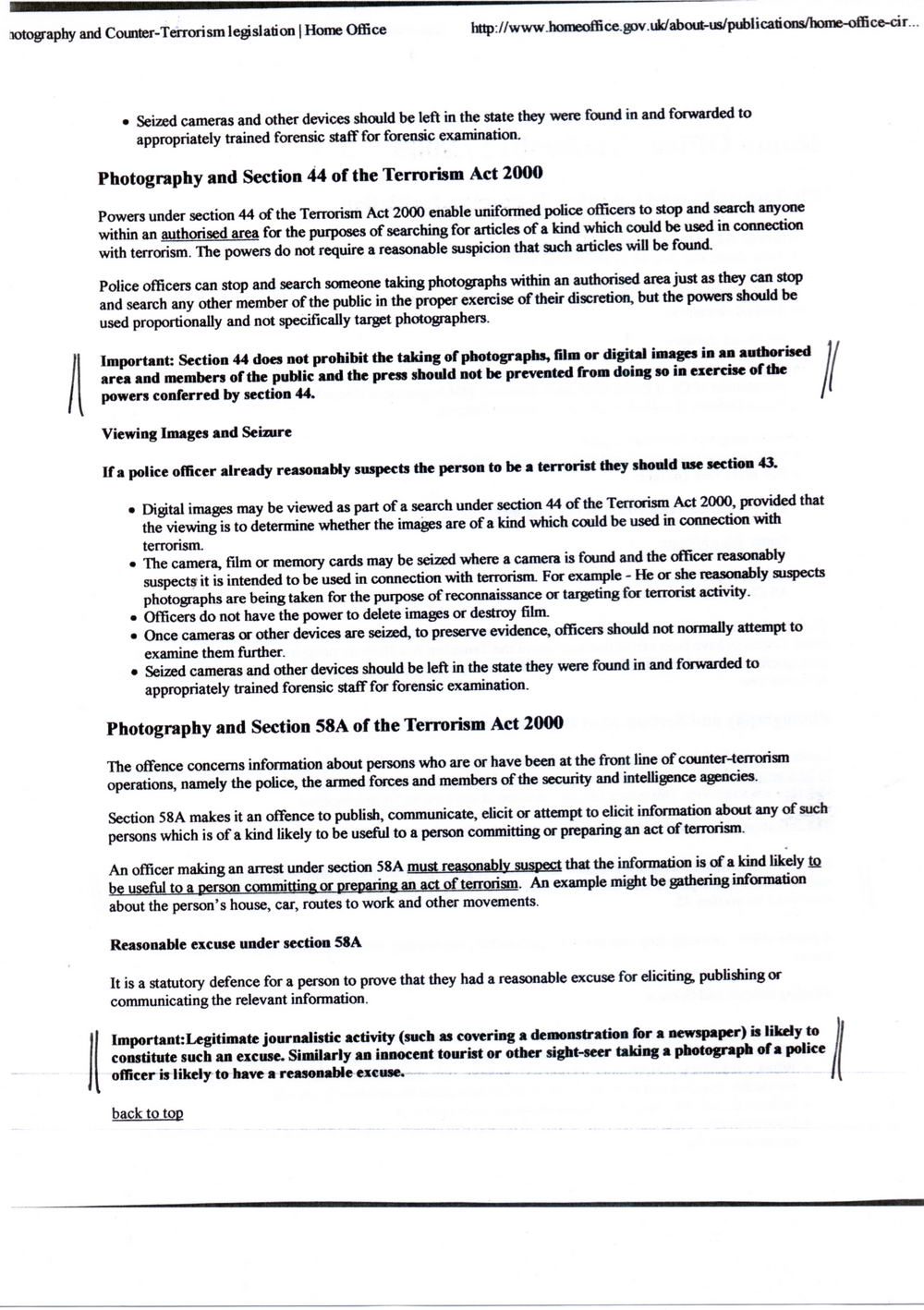
Home Office Circular 012/2009 Photography and Counter-Terrorism Legislation 2
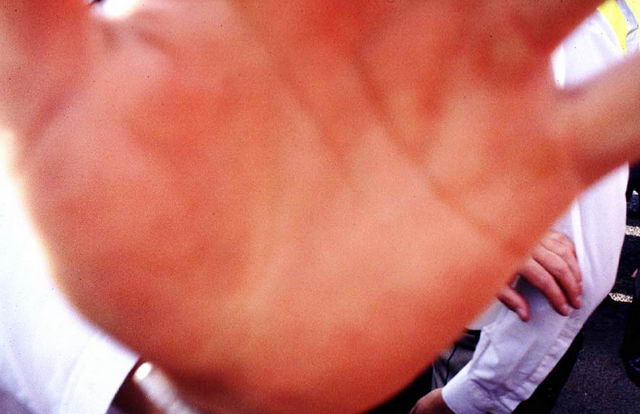
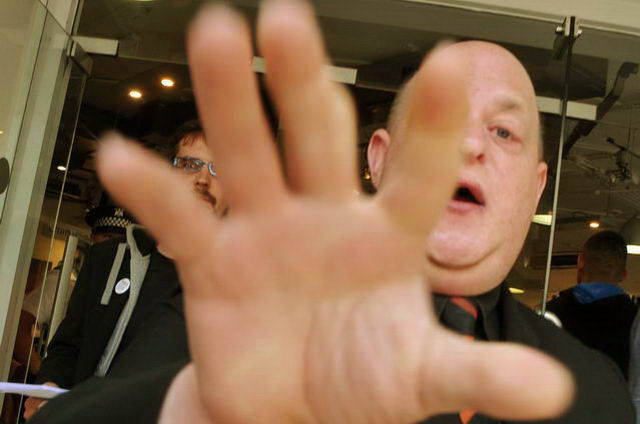
---------------------------------------------------------------------
---------------------------------------------------------------------
Below are links to PDFs. These may be saved or printed out.
Attached Files
 ACPO Trotter Taking of Photographs All Forces Guidance
Statement by Assistant Commissioner John Yates MET News Release
Home Office Circular 012 - 2009
Metropolitan Police Photography advice
Metropolitan Police Media Guidelines
Nottinghamshire Police Guidelines for police and media at incidents
Photographer Not Terrorist s44bust
Photographer Not A Terrorist pamphlet
Shamik Dutta, Fisher Meredith : Photography Legal FAQ
British Security Industry Association Photography Guide
ACPO Communications Advisory Group Guidance
 Contact email: tash@indymedia.org

Comments are not allowed on this article.

 Latest articles feed