

N30 march in Nottingham
 Published:
December 01, 2011 20:16
by Working Class Heroine |
Published:
December 01, 2011 20:16
by Working Class Heroine |
Neighbourhoods: mansfield_road nottingham
The November 30th march in Nottingham in defence of public sector pensions was huge. It was by far and away the biggest demonstration I've ever been on in the city and it's even been suggested that it could have been the largest trade union demonstrations in Nottingham's history.
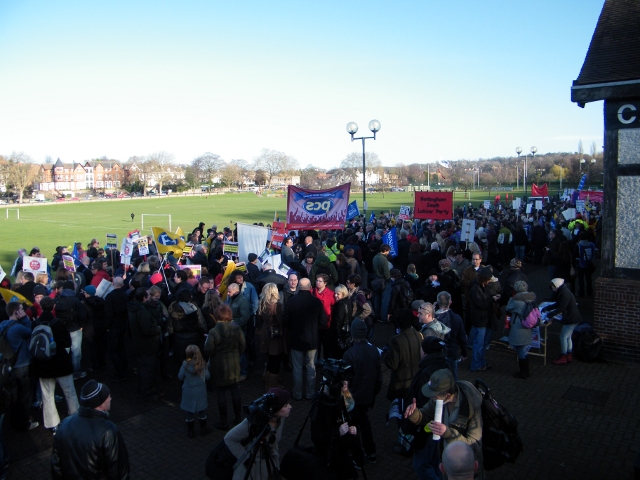
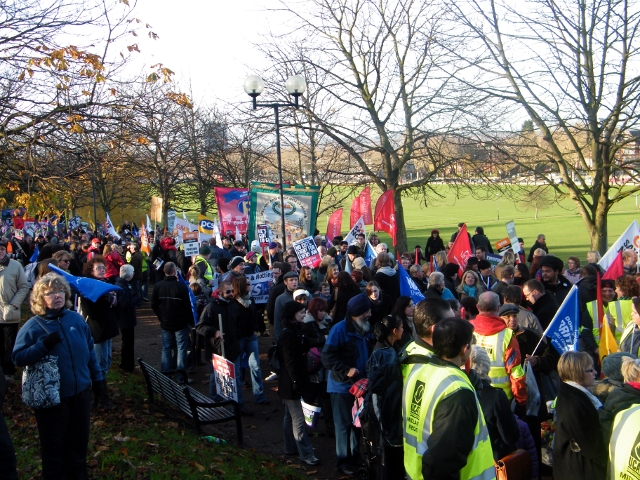
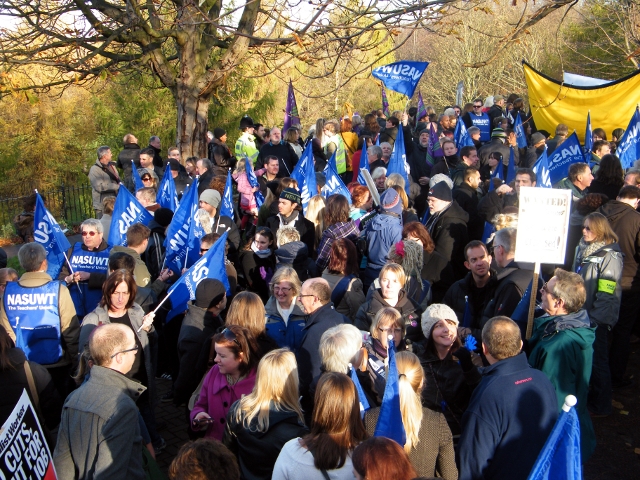


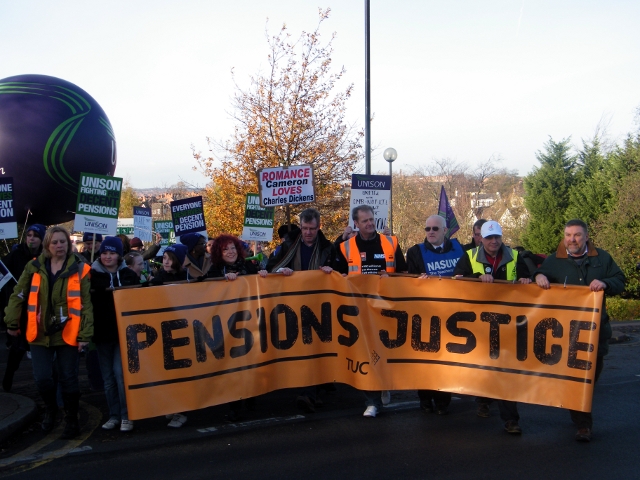
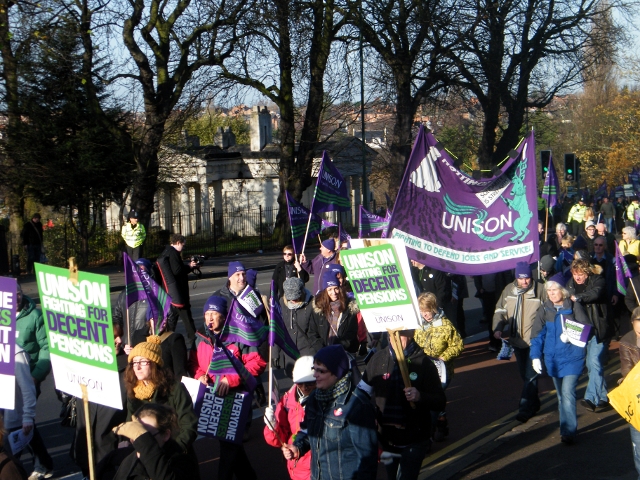
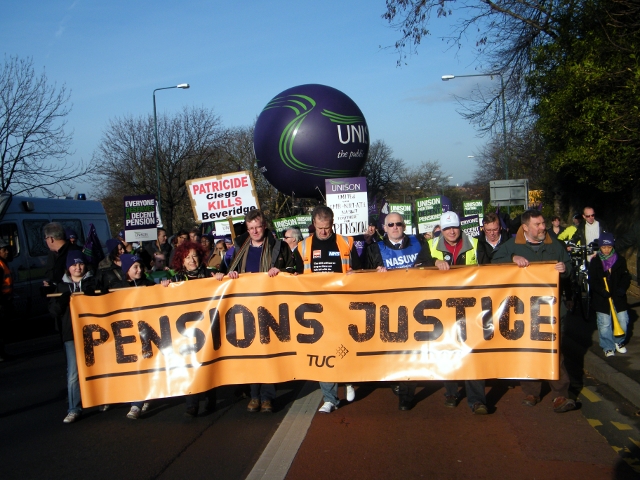



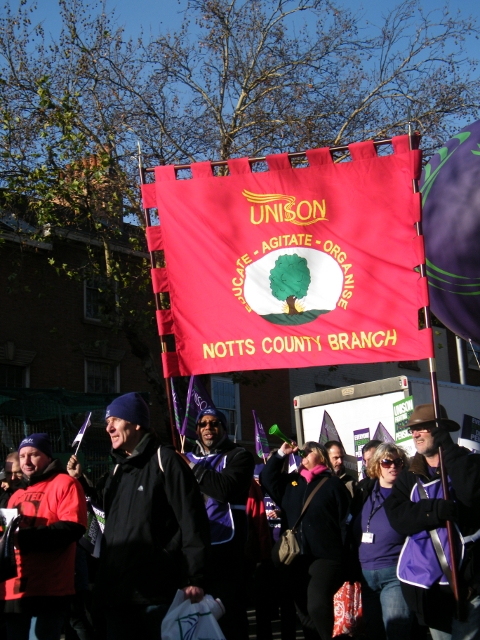

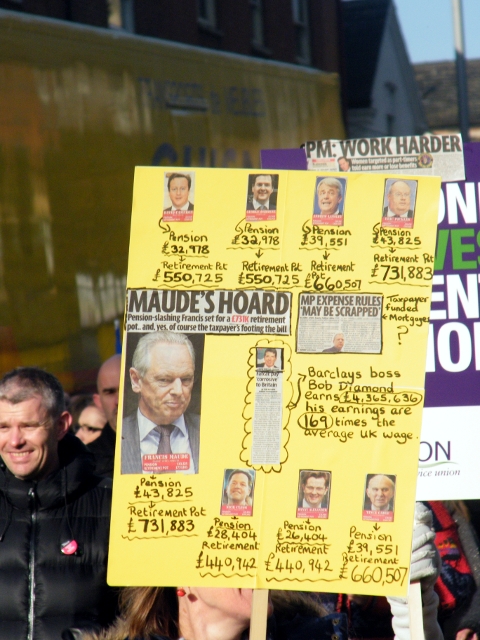
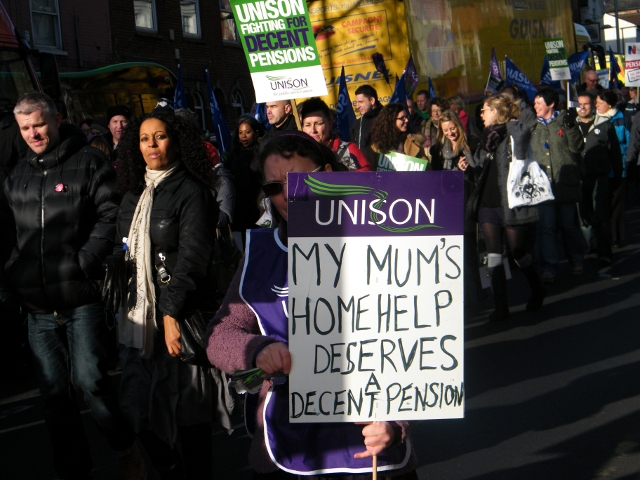
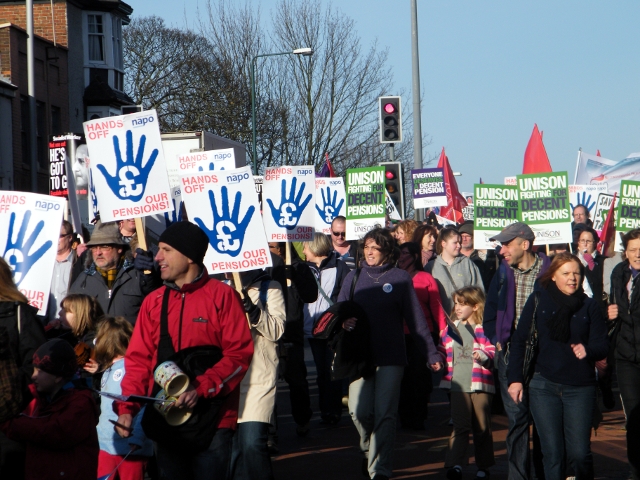
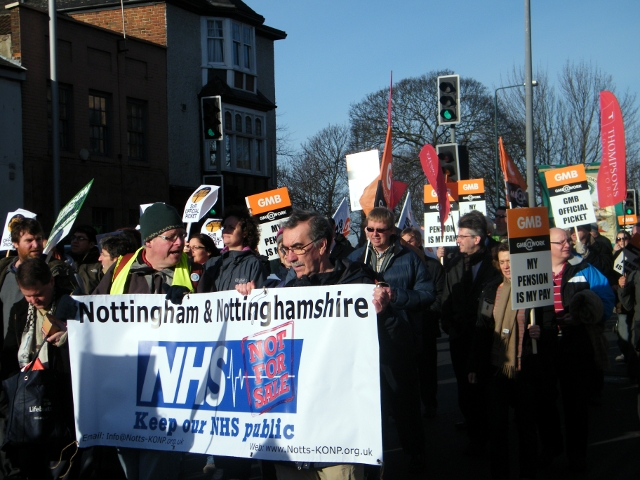
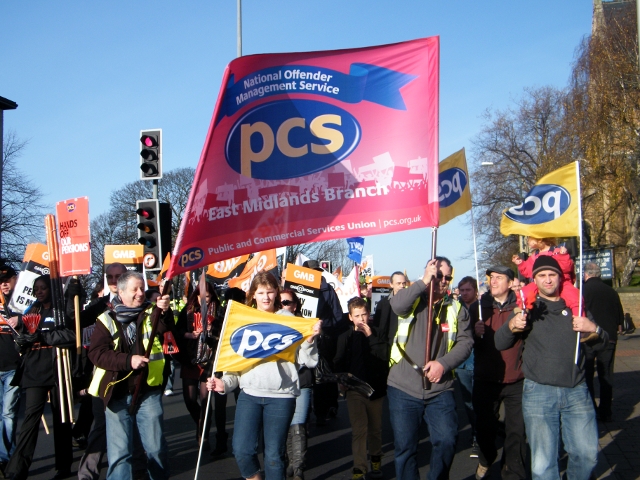
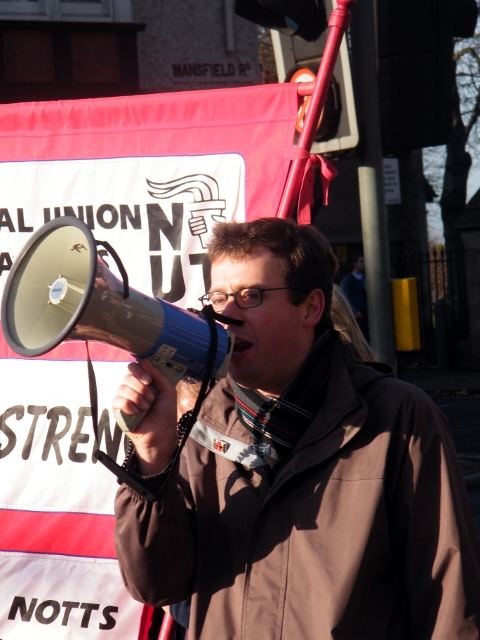
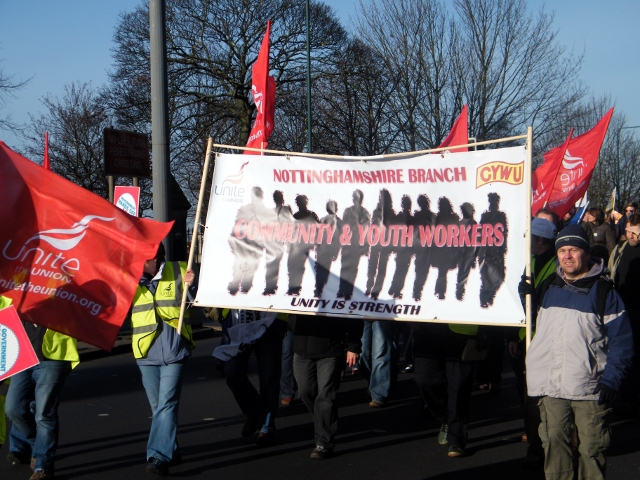
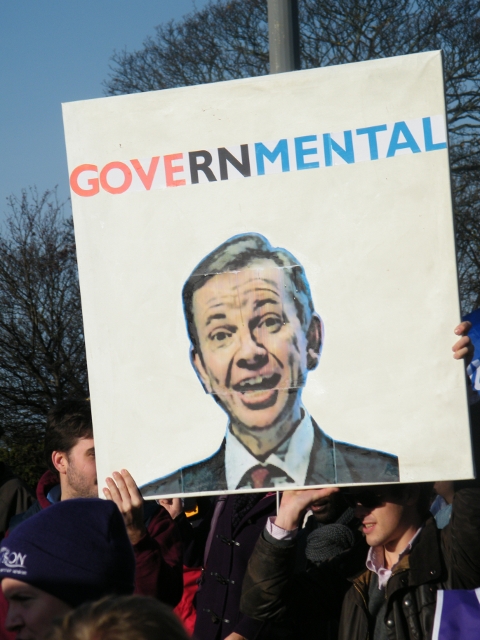
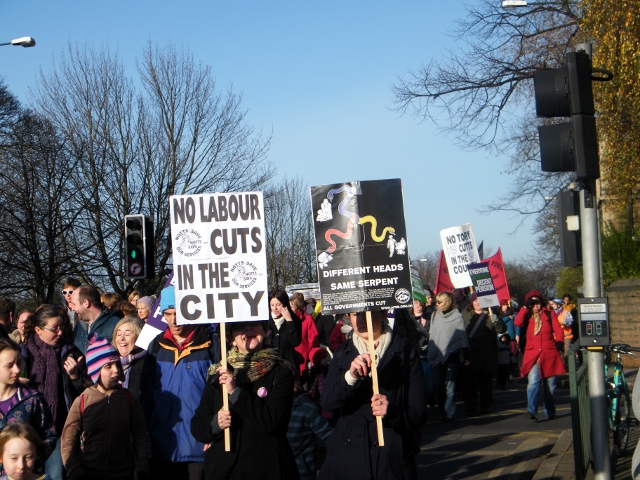

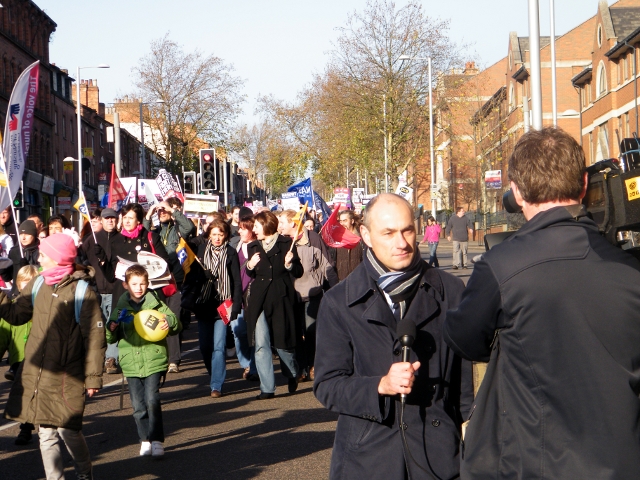
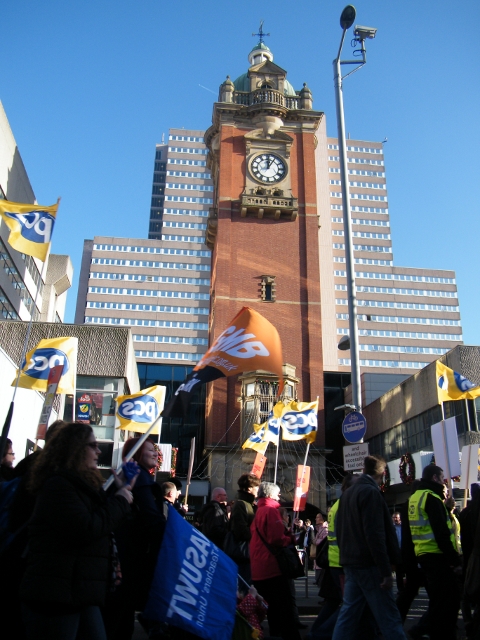

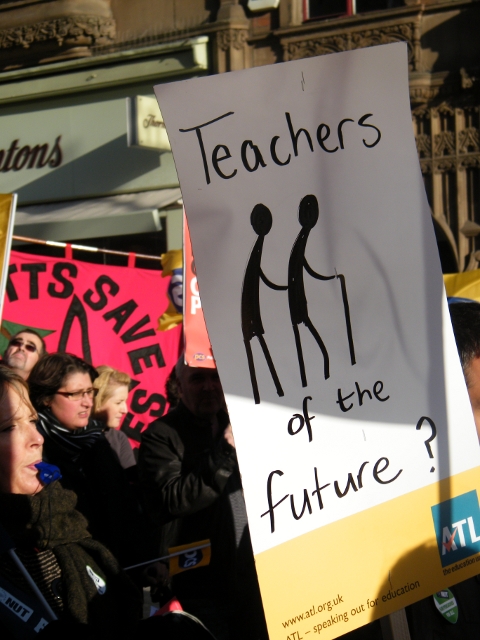
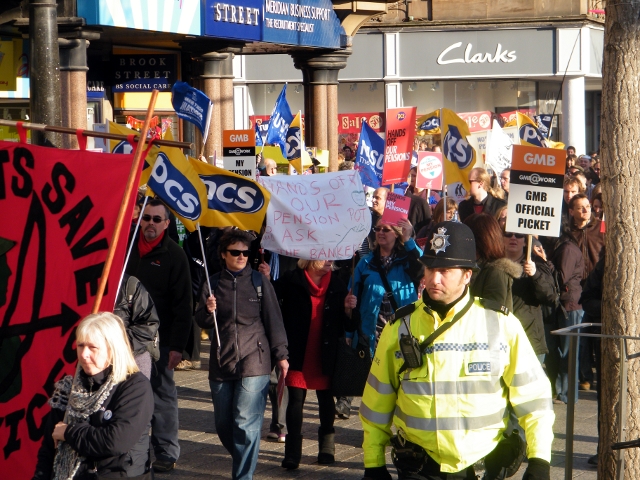
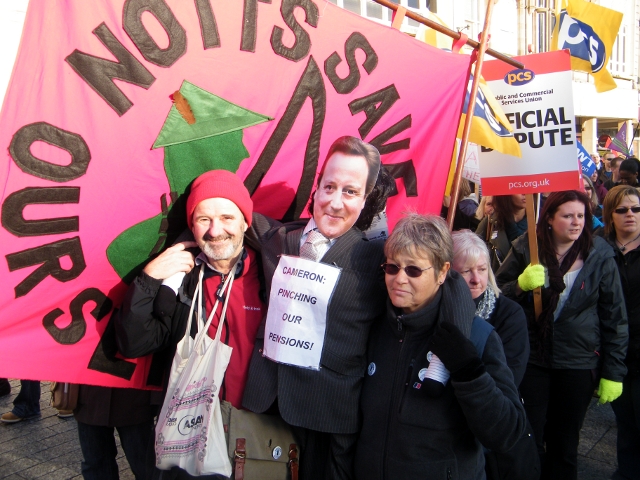
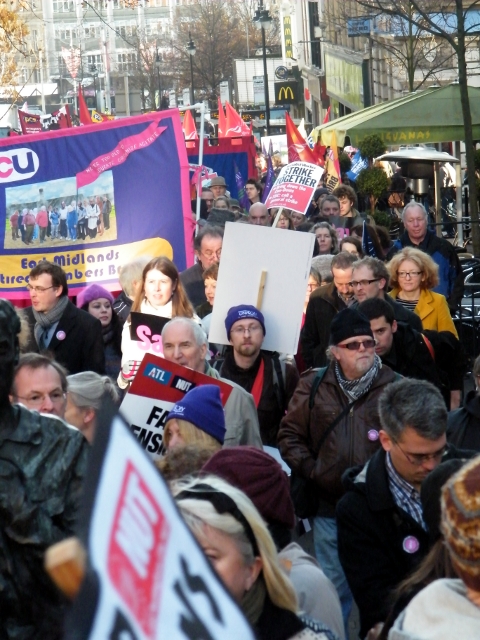
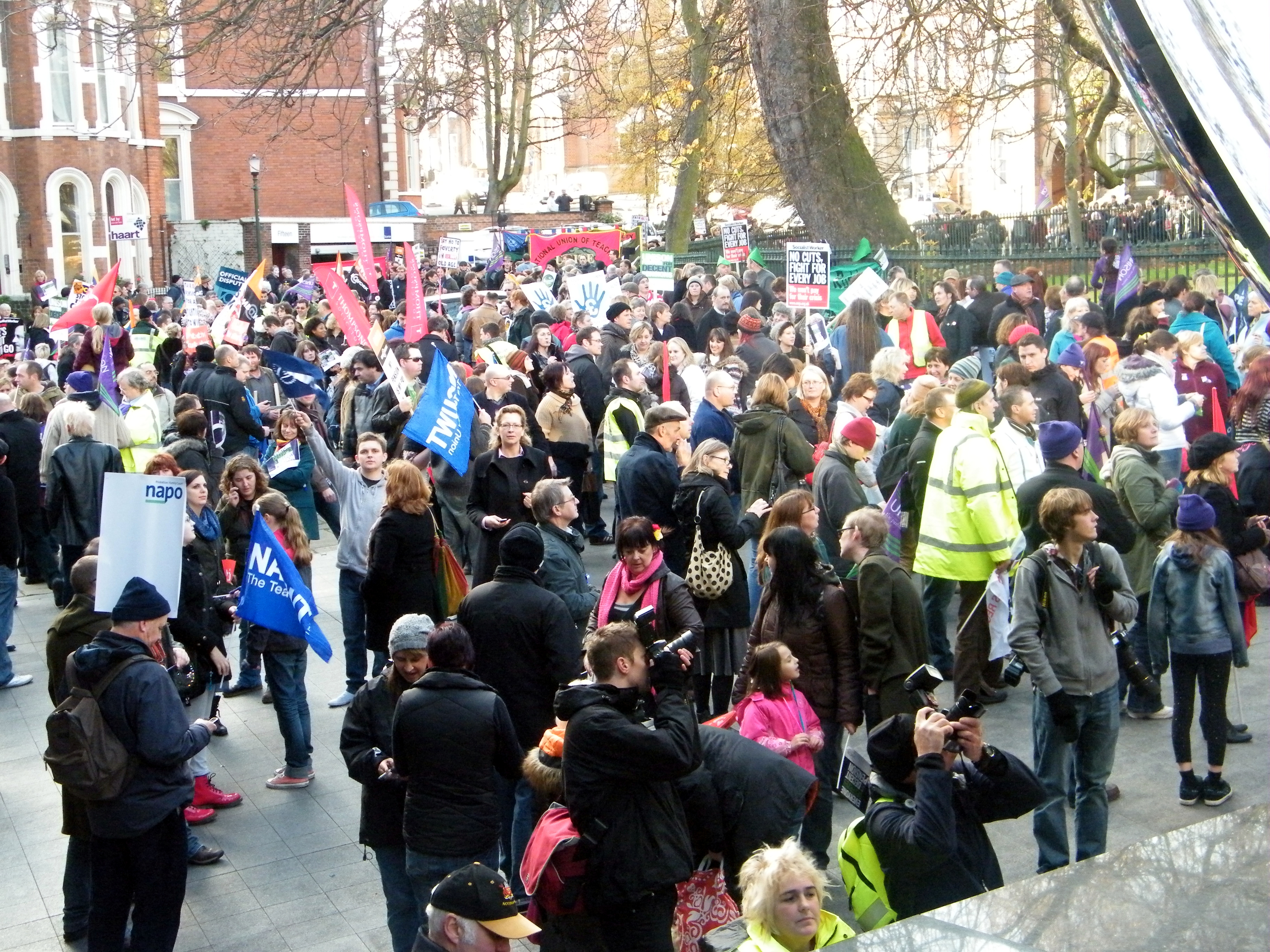
Estimating numbers on marches is always controversial, but there is no doubt that this was a huge march. Notts Police estimated 5-6,000 marchers, while a friend who made an attempt to count the demonstrators put the number at 10,000.
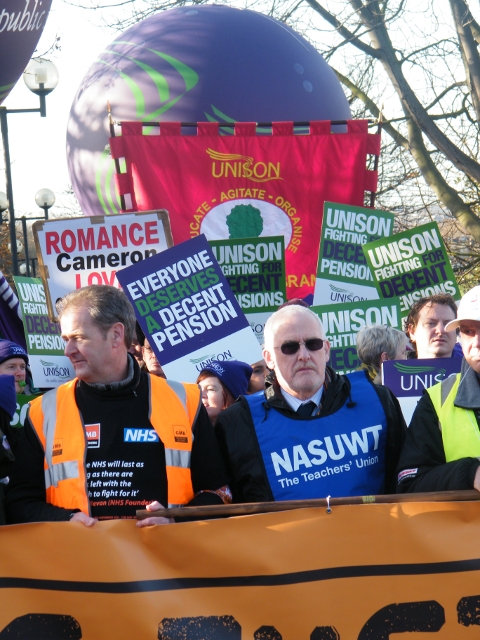
As is traditional in Nottingham, the march formed up at the Forest Recreation Ground before making its way down Mansfield Road. The march was led by a "pensions justice" banner carried by a number of union dignitaries followed by a sizeable Unison bloc decked out in purple. Behind them snaked thousands of strikers and supporters.
The fact that this was part of a national strike meant that it attracted considerable media attention and there were a small army of photographers snapping away as the march went on its way.
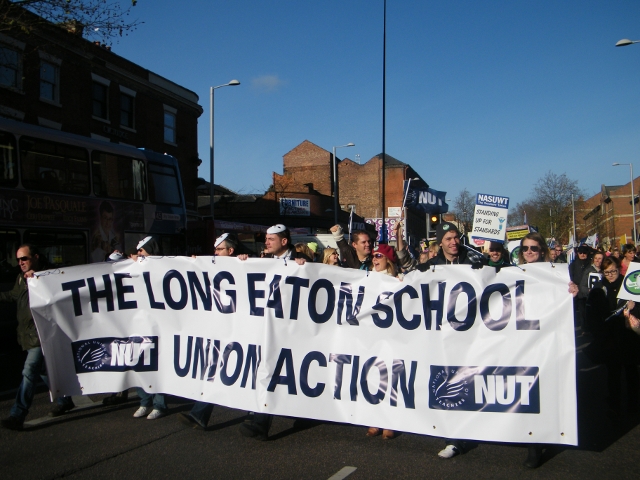
Unions represented included many of those on strike: ATL, NUT, NASUWT, GMB, PCS, Unite, Unison, UCATT and a number of others joining the march in support such as CWU, FBU and RCN. There were also a number of banners from political organisations ranging from the Labour Party to the Anarchist Federation via Keep Our NHS Public.
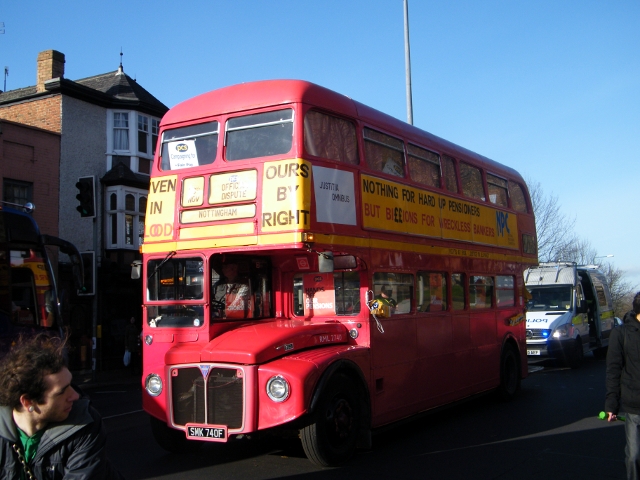
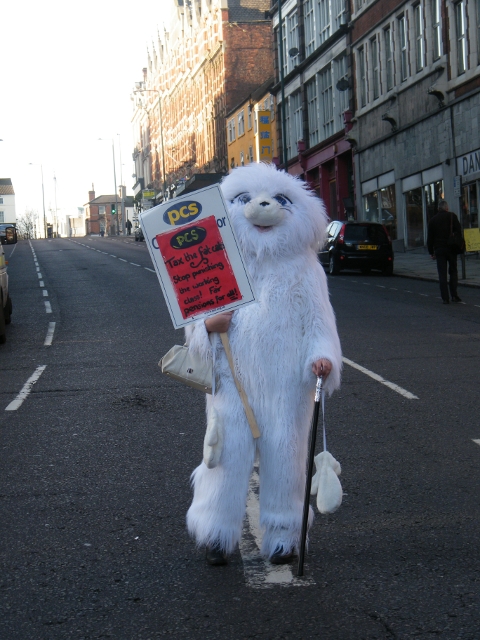
Coming up the rear of the march was an Unison advertising lorry and a Routemaster bus decorated with pro-strike messages by the PCS.
The volume of people made coherent chanting difficult, but with so many people and an array of whistles and vuvuzelas the protest was at times deafening.
The sheer size of the march inevitably caused major delays along Mansfield Road and in the surrounding area, but the response to the march was largely positive, with demonstrators receiving a standing ovation from passers-by at the bottom of Mansfield Road. Many of the taxi drivers parked up while the march went past were also waving union flags.
Part way down Mansfield Road a group from the Refugee Forum (itself affected by cuts) had come out with a banner to show their support.
There was a further demonstration of solidarity from the Occupy Nottingham camp, which the march made its way past. It is also worth noting that marchers responded positively to the occupation, pointing perhaps to the possibility of mutually beneficial activities in the future.
From the Market Square, the march continued up Angel Row, across the roundabout and up Derby Road before doubling back to finish outside the Playhouse. There was to be a rally in the Albert Hall addressed by the great and the good. A screen and PA system had been set to convey what was being said to those unable to get in.
Unfortunately, while waiting for the rally to get started the organisers had decided to use this PA to play the cover of 'Let's Work Together' by The Workers over and over and over again. After milling around chatting for a while I eventually decided to decamp to the pub.
Cameron has dimissed the strike as a "damp squib," but the vast size and anger of the Nottingham demonstration gives the lie to his posturing. With even larger demonstrations reported in London, Birmingham and Manchester with sizable marches in many other towns, to say nothing of widespread disruption, particulrly in schools, it is clear that this was a massive strike.
It has been a long time since I've been so inspired by a demonstration and it was clear from talking to other marchers that I was not alone. There is a real opportunity to be built on here and it is disappointing that the trade union leadership does not seem to have a strategy of where to go from here.
This is unlikely to be the end of the dispute and further strike action (probably in the new year) is almost inevitable. Victory is far from assured, but we're off to a good start. I'll see you on the streets!


 Latest articles feed
Who does have the strategy?
The writer noted: 'it is disappointing that the trade union leadership does not seem to have a strategy of where to go from here.' What, the Sumac Centre / Occupy camp-let do? But why disappointed? The TU leadership are in the business of negotiating a deal - a better or a worse deal depending on the leverage they can bring to bare, their ability to mobilise their membership, their negotiating skill, tenacity etc. Like the Occupy movement (at its best), the TUs (at their best) are working out where they want to go, figuring out how to build alliances, and link beyond the particular interests of their membership. No one has The Strategy here. Not the TU general secretaries, or the Nottinghamshire Trades Council Revolutionary High Command, or the Blik-Blok, or the counter-culturati. We're in new territory. Great day out. Brilliant spirit. Now back to where we came from - workplaces, the camp-let, the alternative scene - wherever - to work out how move forward. Key thing is building from the bottom, whilst not getting seduced by our own bullshit (just as we don't believe their bullshit) and recognising that although we came together for a great day out there is still a lot of ground work to do ...